Surface type
Different surfaces need the right roller. By substrate, we group them into rollers for smooth, semi-rough and rough, exterior surfaces.

Rollers for dispersion, acrylic, facade, epoxy and varnish coatings, for every paint and every surface.
Direct from the manufacturer, under our brand or yours.
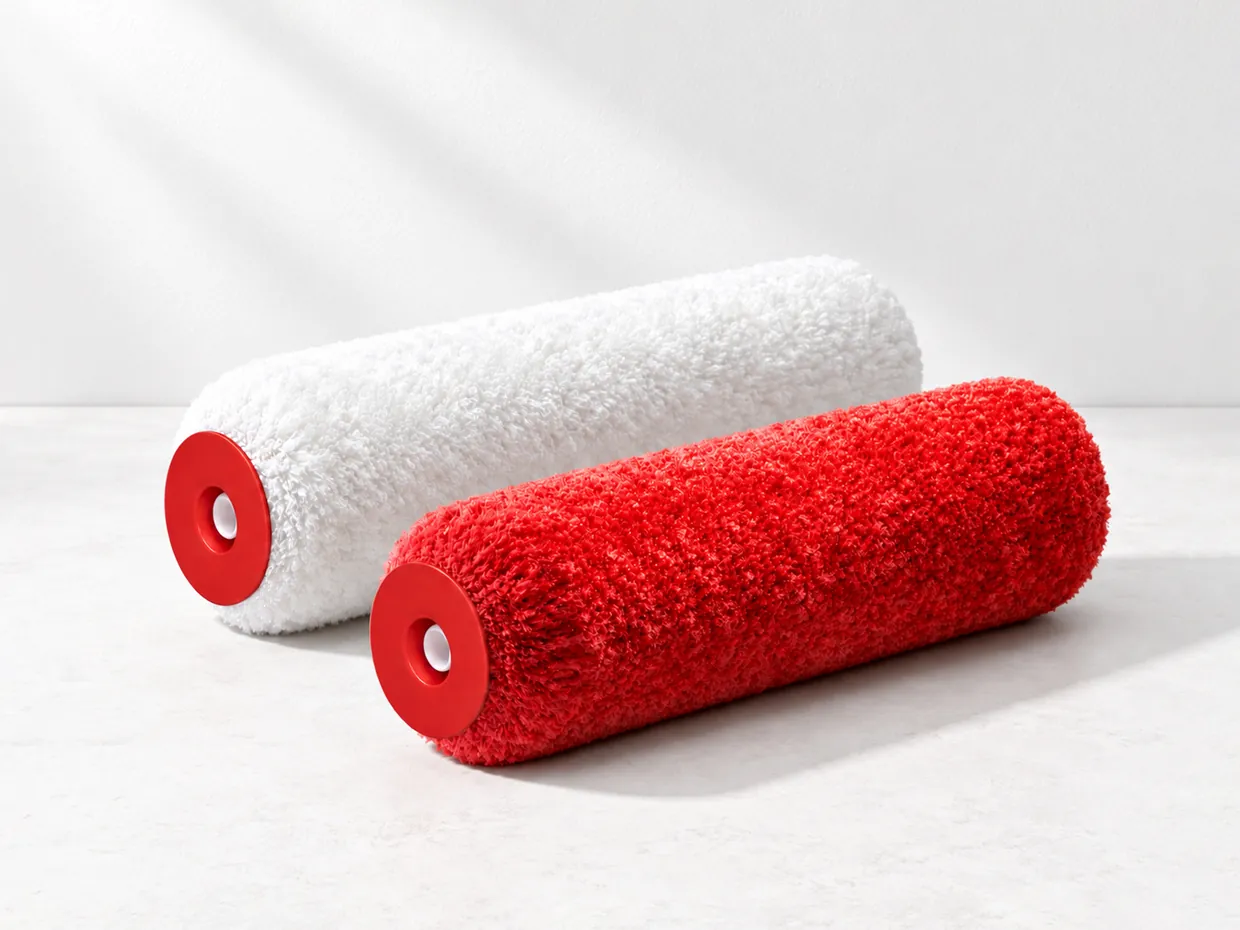
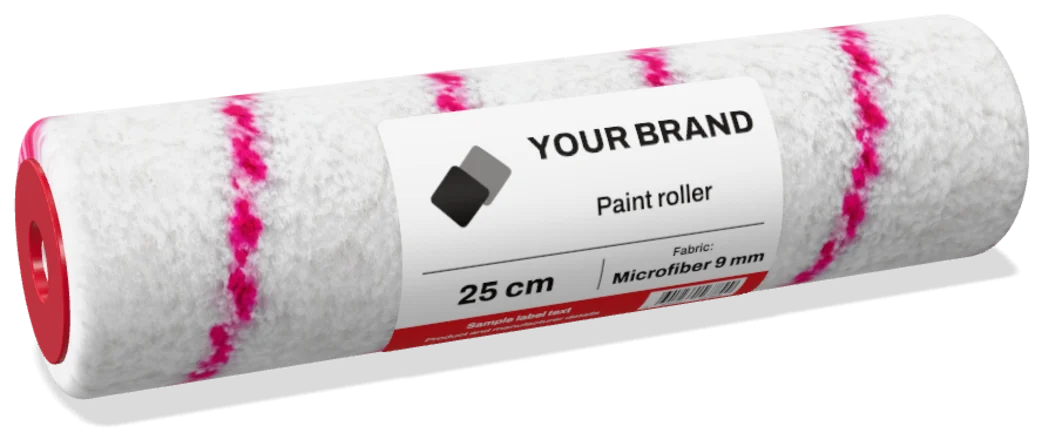
Choose the fabric, length and cap colour, add your logo and see your roller right away.
When choosing a paint roller, several factors decide whether you get the result you want.
Different surfaces need the right roller. By substrate, we group them into rollers for smooth, semi-rough and rough, exterior surfaces.
We classify rollers by the paint being applied: dispersion, acrylic and latex paints, special coatings, stains and varnishes, and facade paints.
The fabric and its fibre length and structure decide the finish. Longer fibres suit rough and semi-smooth surfaces; shorter ones suit fine finishes, stains and varnishes. Materials: polyamide, microfibre, acrylic, nylon and wool.
For large areas, use longer rollers with a larger diameter; for small areas, corners and hard-to-reach spots, rollers with a 15 mm core and a length of 10 or 7 cm.
Thermofused rollers have short fibres at the ends, so they barely transfer paint to the neighbouring wall and give precise finishing work. Sewn rollers contain a special foam that keeps them soft and ideal for rough and exterior surfaces.
Two constructions. Different applications.
01
Thermofusion technology
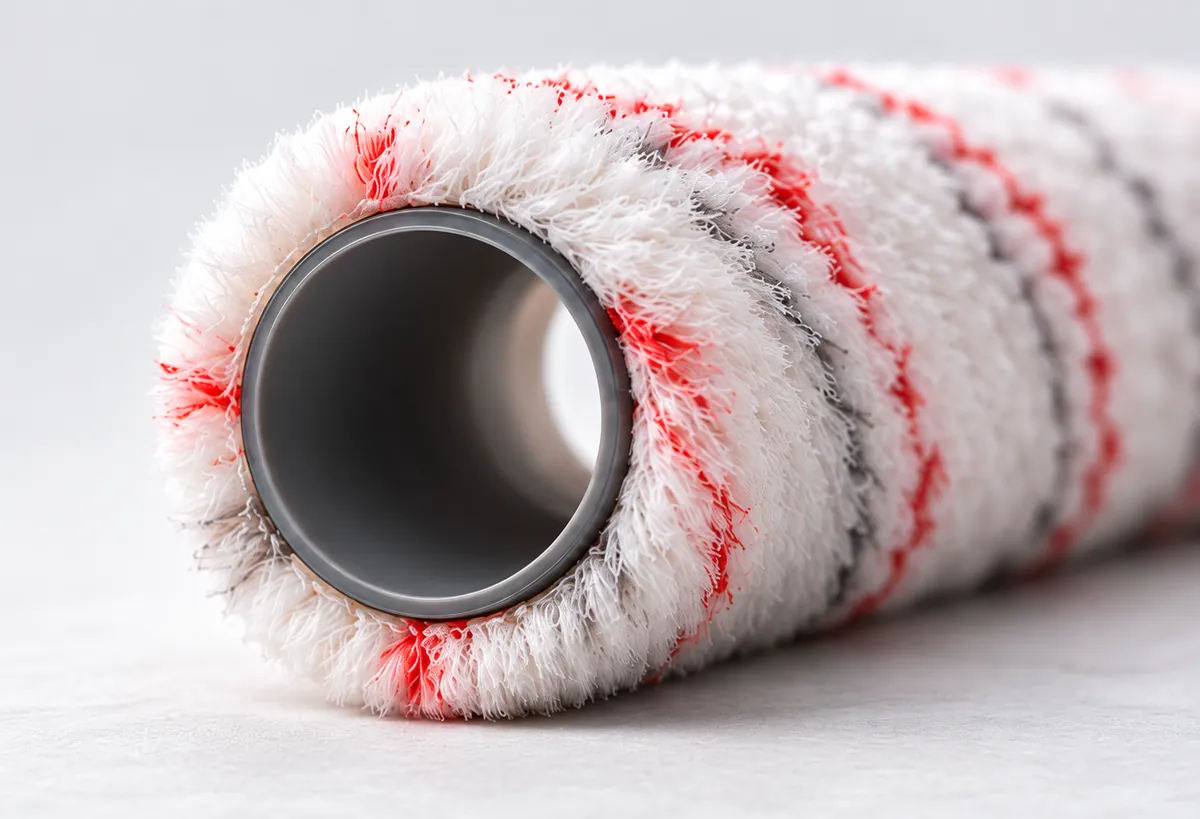
Thermofusion is an advanced technology with which Beorol Prima has moved the painting tools market forward. In this process, heat and mechanical pressure permanently join the plastic tube and the fabric into a single unit: the roller body. End caps are then fitted into the body, linked to each other by an axle tube with a lock. Once the handle wire is passed through the axle tube and the lock, the roller is complete and ready to use.
Thermofused rollers are made for applying paints and varnishes to prepared, flat surfaces of various materials, and the right choice depends on the type and properties of the fabric. Match the roller size to the size of the surface being painted.
02
Thermofusion + sewing
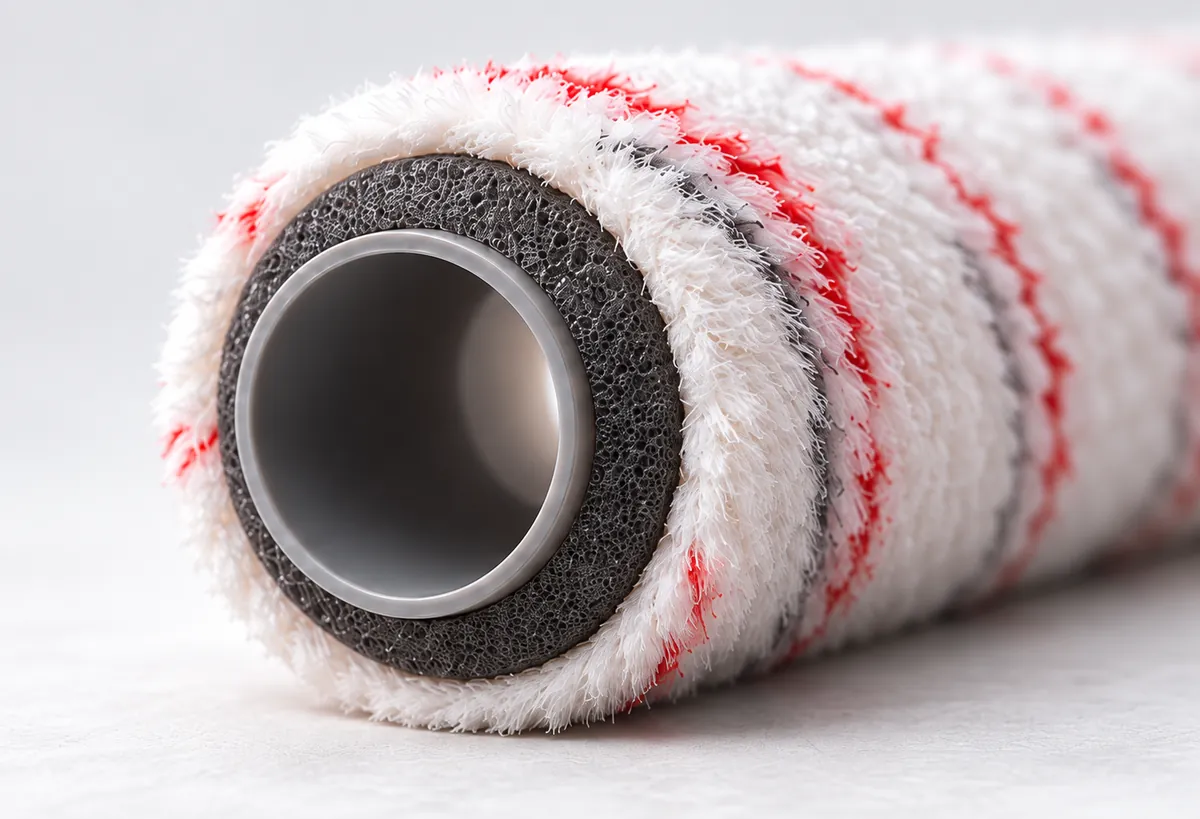
Sewn rollers are made by combining thermofusion and sewing. Thermofusion joins the plastic tube and the polyurethane foam into a firm supporting structure with a more elastic surface. A fabric sleeve, sewn beforehand and turned inside out, is pulled over this tube, which creates a strong bond between the foam and the fabric. The elastic forces between the layers straighten the seam, so it becomes almost invisible on the finished roller. This forms the roller body, into which end caps linked by an axle tube with a lock are fitted. Finally, the handle wire is passed through the axle tube and the lock, and the roller is ready for painting.
The polyurethane foam inside the roller does not absorb paint, so no traces of it remain after washing. Sewn rollers are intended for painting uneven building surfaces, above all with semi-dispersion, dispersion and facade paints. Choose the roller size to suit the surface being painted.
Send us the item codes and quantities and we'll quickly send an offer for your brand or ours.


